How Cape Town’s Water Quality Affects Your Plumbing
June 30, 2026
Fat Trap Cleaning: Why Regular Maintenance Matters
August 26, 2026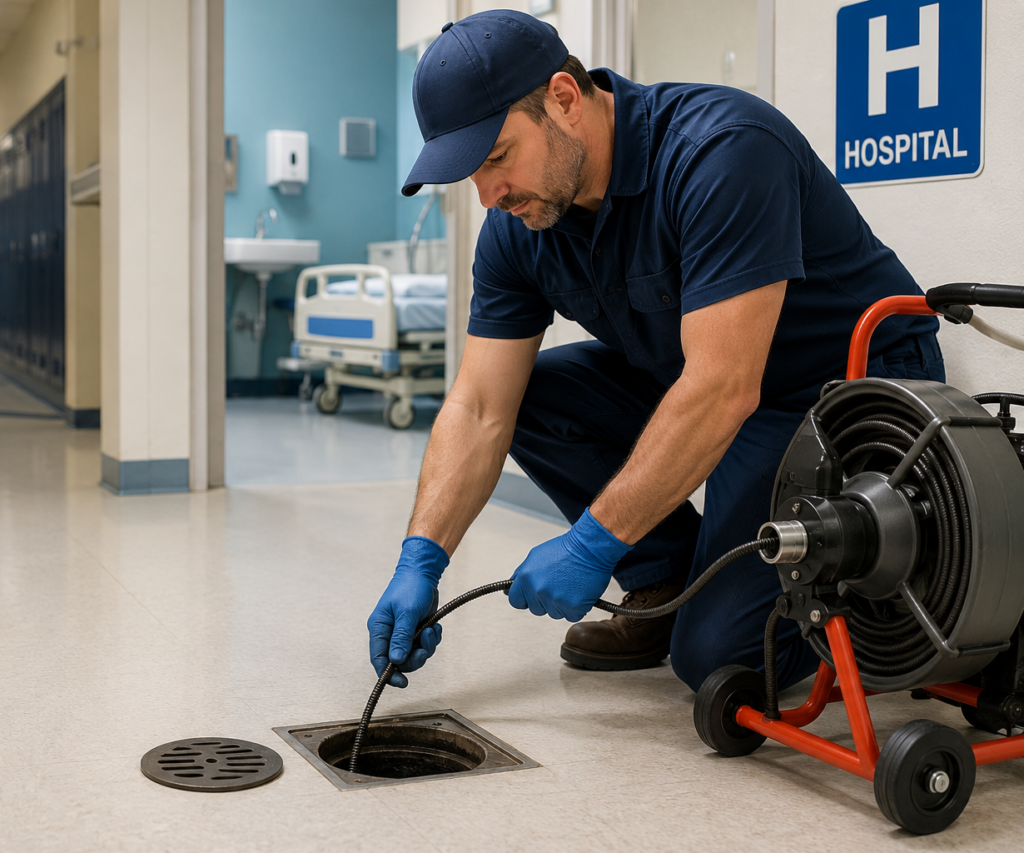
Why Schools and Hospitals Need Routine Drain Maintenance
Schools and hospitals rely on safe, hygienic, and fully functional plumbing systems every day. From classrooms and cafeterias to wards and operating theatres, these facilities experience constant water usage, making their drainage networks work harder than those in most commercial buildings. Without regular drain maintenance, small drainage issues can quickly develop into costly repairs, health hazards, and operational disruptions.
Implementing a preventative drain maintenance programme helps schools and healthcare facilities maintain a clean environment, minimise downtime, and extend the lifespan of their plumbing infrastructure.
The Importance of Preventative Drain Maintenance
Drainage systems are designed to transport wastewater efficiently, but daily use inevitably leads to the accumulation of grease, soap residue, food waste, paper products, and other debris. Over time, these materials reduce water flow and increase the risk of blockages.
Routine drain maintenance removes these build-ups before they cause problems, ensuring the entire plumbing system continues to operate efficiently. Rather than reacting to emergencies, facility managers can prevent them altogether with scheduled inspections and cleaning.
Protecting Health and Hygiene
Maintaining excellent hygiene standards is essential in both educational and medical environments. Blocked drains can result in unpleasant odours, stagnant water, and bacterial growth, creating unhealthy conditions for students, patients, staff, and visitors.
In hospitals, sanitation is especially critical. A drainage issue can compromise infection control measures and affect sensitive healthcare areas. Similarly, schools require clean facilities to provide a safe learning environment and reduce potential health risks.
Routine drain cleaning helps maintain proper sanitation by preventing wastewater backups and eliminating conditions where harmful bacteria can thrive.
Preventing Unexpected Plumbing Emergencies
Drain blockages rarely happen without warning. Minor restrictions usually develop gradually before escalating into complete obstructions. Unfortunately, these problems often become apparent during peak operating hours when facilities are at their busiest.
Emergency plumbing repairs can interrupt lessons, delay medical services, close washrooms, and create inconvenience for everyone using the building.
Scheduled drain inspections identify developing issues early, allowing maintenance teams to address them before they become emergencies.
Reducing Long-Term Maintenance Costs
Preventative maintenance is significantly more cost-effective than emergency repairs. Ignoring small drainage problems can eventually lead to damaged pipes, overflowing drains, water damage, and expensive restoration work.
Routine maintenance helps facilities avoid:
- Emergency plumbing call-outs
- Major drain repairs
- Water damage to buildings
- Premature pipe replacement
- Business and operational interruptions
By investing in regular drain cleaning, schools and hospitals can better manage maintenance budgets while protecting valuable infrastructure.
Supporting Compliance and Safety Standards
Educational institutions and healthcare facilities must comply with strict health and safety regulations. Properly maintained drainage systems contribute to cleaner, safer premises and reduce the likelihood of sanitation-related issues.
Routine maintenance demonstrates a proactive approach to facility management, helping organisations meet operational standards while creating a healthier environment for occupants.
Detecting Hidden Problems Early
Not every drainage issue is visible. Cracked pipes, tree root intrusion, collapsed drains, corrosion, and structural defects often develop underground without obvious warning signs.
Professional CCTV drain inspections allow specialists to assess the internal condition of drainage systems without unnecessary excavation. High-definition cameras identify hidden faults accurately, enabling targeted repairs before serious damage occurs.
Early detection reduces repair costs and prevents unexpected failures.
Improving Drain Performance with Hydro Jetting
One of the most effective methods of preventative drain maintenance is hydro jetting. This process uses high-pressure water to remove grease, sludge, mineral deposits, scale, and stubborn debris from the inside of pipes.
Unlike temporary solutions that simply create a small opening through a blockage, hydro jetting thoroughly cleans the entire pipe diameter, restoring optimal flow and helping prevent recurring blockages.
For schools and hospitals with high daily water usage, hydro jetting is an excellent solution for maintaining reliable drainage performance.
Extending the Lifespan of Plumbing Systems
Drainage infrastructure represents a significant investment. Regular maintenance reduces unnecessary wear on pipes by preventing excessive pressure caused by blockages and restricted flow.
Clean drainage systems experience fewer breakdowns, require fewer repairs, and generally remain operational for much longer than neglected systems.
A preventative maintenance schedule helps maximise the lifespan of existing plumbing assets while reducing future replacement costs.
Minimising Disruption to Daily Operations
Schools cannot afford classrooms to close because of overflowing toilets or blocked drains. Likewise, hospitals require uninterrupted plumbing services to provide continuous patient care.
Routine drain maintenance is typically scheduled during quieter periods, allowing work to be completed with minimal disruption. Preventative servicing significantly reduces the likelihood of unexpected plumbing failures that could interrupt normal operations.
Choosing a Professional Drain Maintenance Provider
Large facilities require specialised equipment and experienced technicians to maintain complex drainage systems effectively. A professional plumbing contractor can provide comprehensive maintenance services, including:
- Scheduled drain cleaning
- Hydro jetting
- CCTV drain inspections
- Blocked drain clearing
- Leak detection
- Preventative maintenance programmes
- Emergency plumbing support
Partnering with experienced drainage specialists ensures problems are identified early and resolved efficiently before they affect daily operations.
Conclusion
Routine drain maintenance is an essential part of managing schools and hospitals. Preventative cleaning, regular inspections, and proactive plumbing maintenance help protect health, reduce repair costs, minimise disruptions, and extend the lifespan of drainage systems.
Rather than waiting for blocked drains or plumbing emergencies to occur, facility managers should implement scheduled maintenance programmes that keep drainage systems operating safely and efficiently throughout the year.
A proactive approach not only protects buildings and infrastructure but also creates cleaner, healthier environments for students, patients, healthcare professionals, educators, and visitors.